Cleaning Your Braces

Keeping Teeth Clean During Orthodontic Treatment

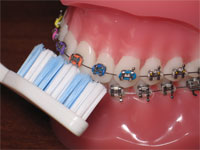
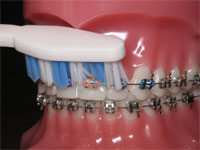
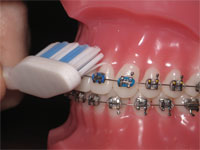
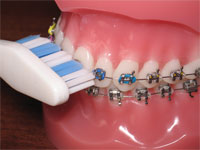
General Tips for Cleaning Braces
Dental Emergencies
Dental Emergencies
Dental Emergencies
Dental Emergencies
  • Brush teeth at least 3 times per day or after each meal.
  • Each cleaning session should take around 3 minutes.
  • Only brush a few teeth at a time to ensure that you are thorough.
  • Use a fluoride mouthwash to get into the areas that you might have missed.
  • Floss everyday with specialised orthodontic floss

Also, be careful about the foods you eat.

Of course you aren't expected to give up every food item that you love, and if you cut food into small pieces and chew carefully, you can enjoy just about anything.

Brushing alone, however will not remove all of the plaque. Superfloss should be used at least once a day to remove plaque between the teeth.

Types of Food to Avoid During Orthodontic Treatment

  • Foods which are hard to bite such as apples, carrots and nuts
  • Chewy food types such as toffee, chewing gum and caramel

If you can't squash it in your fingers - DON'T EAT IT!

We recommend that you make use of the following cleaning tools which you can buy on your next appointment with us:

Specialised orthodontic toothbrush

This will not be too hard or too soft

Interdental brushes

These are small brushes with a cone shape that are designed to fit under the wire and in small spaces around the brace bracket

Superfloss

This is a type of dental floss that is designed for wide spaces. It has a harder, narrow end for easy threading through your braces and the spaces in your teeth

Fluoride mouthwash

Strengthens enamel and helps prevent tooth decay in hard-to-clean areas around braces

Professional cleaning every 3-4 months is needed and very important.
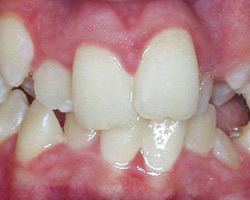
Crowding of Teeths

Crowding is the lack of space for the teeth to fit normally within the jaws. The teeth may be twisted or displaced

Crowding should be corrected because it can:

  • Prevent proper cleaning of all the surfaces of the teeth.
  • Cause dental decay.
  • Increase the chance of gum disease
  • Prevent proper functioning of teeth.
  • Make your smile less attractive.
Teeth Crowning

Crowding can be corrected with braces, by expansion of the arches or extraction of teeth.

Once space is created, braces will be used to to correct the crowding and align the teeth.

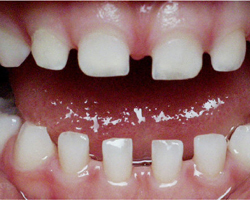
Teeth Spacing

Spacing, the opposite of crowding, is an excess of space for your teeth, resulting in gaps between the teeth.

Spacing should be corrected because it can:

  • Result in gum problems due to food impaction during chewing
  • Prevent proper functioning of the teeth.
  • Make your smile less attractive.
Teeth Spacing

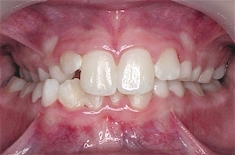
Teeth Crossbite

The upper teeth should fit outside the lower teeth like a lid on a box. If the upper jaw is too narrow, the lower jaw usually swings to one side to allow the back teeth to mesh.

A posterior crossbite results this can lead to asymmetric growth of the lower jaw!

crossbite

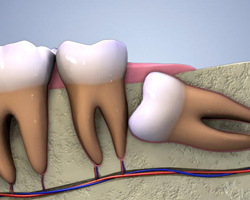
Impacted Teeth

Impacted teeth - is caused when the developing tooth bud grows in the wrong direction or if it is blocked out by other teeth.

This can cause the tooth to fail to erupt into the mouth. Wisdom teeth are the most commonly impacted teeth.

This problem should be corrected because it can:

  • Cause damage to the root structure of adjacent tooth/teeth.
  • Interfere with the sinus cavity.
  • Leave unwanted spaces.
  • Lead to improper functioning of the teeth.
  • Cause premature wear of the teeth.
  • Crowding as the tooth tries to push through - (also a cause of relapse after treatment)
Impacted Teeth

Missing Teeth

Missing teeth - Is the absence of a tooth or teeth that should normally be present.

This can be caused by trauma or lack of development or extractions.

This problem should be corrected because it can:

  • Cause collapsing of the bite.
  • Cause drifting of the teeth.
  • Cause asymmetric alignment of the teeth.
  • Lead to improper functioning of the teeth.
  • Make your smile less attractive.